There's no review this week, and one reason is that I've gotten pulled back into StarCraft 2, as well as Pokemon Black Version (for which I make no apologies). I tend to not review more mainstream games, for reasons I've addressed previously, but when I was thinking about what draws me to these games (aside from the fact that they're tailor made to be hideously addictive) I started thinking a lot about the symmetry and asymmetry in play. For both, I'll be addressing primarily the multiplayer element, since that's where this is most visible.
The symmetry in the games is about options. In all cases, all players have the same options. For Starcraft, that's at the start of the match, when you select your race and begin building units. The choices you make limit your later choices, but all players have the same choices at the start of the match. For Pokemon, this starts way earlier, in the metagame. When you're playing, either side COULD have any given Pokemon with any given move set. Depending on the level of play it's rare that two teams be exactly identical, just as in Starcraft 2 the players likely won't have exactly the same build order and army composition.
It's important that you have the same options, but also important that you likely won't make the same decisions as your enemies. Given that, solid asymmetrical gameplay relies on being able to make different choices and still have numerous different viable strategies - that is, asymmetrical gameplay must be balanced to be fun, and it turns out balance is really hard to do in asymmetrical games.
For SC2, the game is presumably balanced at the start of each match; the metagame is about which strategies are possible, effective, and therefore likely, and how they might be combated. Like chess, you can bring in a lot of knowledge about what's possible or not, but the starting pieces are always the same: one base, six workers. The balance is built into the game, even down to matchmaking pitting you against players of similar skill. Each of the three races you can choose is balanced; though you can certainly make choices after picking a race that are worse than other choices you might have made, no race is dominant over either of the others, and there's no dominant (best) strategy for any race over any other.
For Pokemon, you absolutely cannot presume balance at the start of a match. At the beginning of a match, each player's understanding about the metagame and patience in constructing a solid team is already evident. A game of Pokemon could begin with one player with a full team of six all at the highest possible level versus a team of one at the lowest possible level. This is unbalanced asymmetry. Pokemon provides a few tools for balance, like scaling teams to the same level, but because some moves, stat distributions, team compositions, and even Pokemon are categorically worse than others, this only partially addresses the problem. Magikarp simply has fewer move options and worse stats than Gyarados; Slash is in almost every way a better move than Scratch. Imbalance is built into the game, and arguably the multiplayer metagame suffers for it. Players have attempted to solve this themselves through a number of means, notably limiting the use of certain Pokemon in certain competitions. Pokemon are often divided into "tiers," where battles of a certain tier preclude the use of Pokemon from higher (but usually not lower) tiers. However, these tiers are not official and participation in them is voluntary. Friends tend to have to agree on whether their teams are balanced enough that a fight can be considered fair. If combat were the only social aspect of Pokemon this might be a serious downside; however, trading and various minigames are other strong reasons to play with friends. Though the metagame can be quite exacting and strenuous, the game is geared towards a more casual audience.
In looking at how these games achieve balance in their asymmetry, I started asking myself: why? Why are so many games, from Mortal Kombat to Mario Kart, asymmetrical in their competition? Why do we want asymmetrical challenges in our multiplayer? Symmetrical games like chess can still have an insane amount of variation between games, so why seek asymmetry when it's substantially more difficult to balance?
Asymmetrical games can have a lot of room for unexpected scenarios and outcomes. In Starcraft, that's realizing as you're at the enemy's front gates with your whole army that he's got a raiding party back at you base too small and fast to be worth sending your army back for, but too big for the defenses you've got set up. In Pokemon, it's getting surprised when an enemy your Pokemon is strong against has an unexpected move that knocks you out in one hit. In a symmetrical game, there's usually one starting position, or only a handful; in asymmetrical games, there's usually a number of them, sometimes an inexhaustible number. Even when that number is quite finite, as in Starcraft, negotiating the strengths and weaknesses of each unit against the others, or making a plan when an opponent has gained more resources and a larger army, means individual encounters are rarely identical. What all this amounts to, and what's often great about such games, are the kinds of stories people can tell out of them. Super Smash Bros. may be a game with a lot of asymmetry and randomness, and questionable balance, but it's fun talking about that time when you got a hammer and knocked your enemy directly into a bomb that had just appeared in the sky. Maybe the 30% accuracy, one-hit kill move Fissure in Pokemon isn't considered practical in the metagame, but if you kill half your opponent's team with three consecutive hits you'll be proud of it. Asymmetry creates complicated metagames and complex strategies, it creates probabilities and expectations, and it creates excellent, memorable moments when those expectations are upset by a new strategy or random chance. Carefully examined and balanced, asymmetry creates a fantastic amount of diverse game experiences within a single system; it's an incredibly powerful tool, and it's worth thinking about how it's used in the games you love - or how it might be used in the games you create.
Friday, October 19, 2012

Tuesday, October 16, 2012
Feedback
Effective feedback is something I think we don't notice in a game until it's missing, and even then sometimes we don't recognize it as the source of our dissatisfaction. With any game, though, we want to feel like our actions have reasonable consequences. On some level, that's about ensuring that the game makes logical sense and doesn't have too many elements of randomness to be completely out of the player's hands. But at a much more basic level, we want to feel when we press the B button like Link is swinging a sharp sword. We want the camera to rock and the sound to fade to ringing when a grenade goes off next to us. Good feedback tightens the connection between the player and the game across the controls. Bad feedback (as well as bad controls) makes you feel muddied in the interface, and keeps you out of the experience.
Two big things feedback can do are 1) tell the player that the action they're taking is appropriate (that is, accounted for by the game and potentially helpful to the player) and 2) immerse the player in the world they're exploring. Number 1 can come in a few forms. Say you're playing a game where you pieces of equipment, each mapped to a button, and some are available only in certain locations - say you can only draw/use your sword outside. When you're outside, you want to be able to draw and swing that sword merrily by pressing the button it's attached to - the feedback is simple enough, we see the sword swinging and possibly enemies dying. When you're inside, if the sword is disabled, it's easy enough for the dev just to not let you draw it. However, it's helpful to have some indication that the button still works even it doesn't let you draw; flashing a little warning or playing a noise (like a low buzzer) can let you know that your message was received, your interface is working, and the game says no. Another good example are the places in Closure where you can't drop objects; when you press the drop button, the wall lights up behind you and an angry buzzer plays. If a button is supposed to be used in the game, it's nice to know that it's working even if it doesn't do what you want it to right now. Feedback can also be used to tell the player they're doing something correctly. In the Pokemon games, you may use an attack on the enemy that is more or less effective against that enemy than normal. When a not-very-effective attack lands, the sound is duller and lower-pitched than a regularly-effective attack. When a super-effective attack lands, the sound is higher-pitched and lasts longer. The attacks are even punctuated differently, with the phrases "It's not very effective..." and "It's super effective!" reflecting the excitement of the moment.
Using feedback in this way reinforces player successes - it helps them learn how to play the game well, and it comes to be a small, but perceptible, reward for doing so.
The immersion factor of feedback can't be overstated, and it's important in every way your character/player can interact with the world. Going back to Zelda again (it just does this so well!), pick any game in the franchise and think of what happens when you hit an enemy with your sword. For 2d games, a little sound will play, and the enemy will flash different colors and sometimes shrink back or bounce away, giving you the impression of combat and simulating damage - after all, in real life enemies DO change color when you hit them with a sword. In more recent entries, there's sometimes a rumble (tactile feedback) and a flash of light/enemy changing color or flinching (visual), and sometimes there's even a brief slowdown at the moment of impact that emphasizes it. The sound has a big effect too: Link's sword usually makes a swishing sound as it passes through empty air, but when it hits an enemy it makes a shearing sound like it's passing through something, and sometimes a triumphant note plays in the music.
Aesthetic feedback doesn't even need to be this overt. Little things - dust clouds under the characters' feet, the ice crystals that form on Samus' gun arm when she uses her Ice Beam, or Myst IV's delightful ability to tap objects and hear a sound - can be used to make the game feel like it's reacting to the player. Of course little artistic flourishes of any kind can help make a game memorable, but in the next game you play try to focus on what feedback is a specific result of your actions. Pay attention to what behavior is encouraged and what behavior is discouraged, and how, and why. I've heard it said of table-top role-playing games that the goal of the person leading the game to get the players to do what he wants them to while thinking it was their idea. The same concept applies in video games: we want players to think they've figured something out on their own, to be proud of their accomplishment - but we want to guide that learning, sometimes quite subtly. Feedback is one of the best tools developers have for that.
Two big things feedback can do are 1) tell the player that the action they're taking is appropriate (that is, accounted for by the game and potentially helpful to the player) and 2) immerse the player in the world they're exploring. Number 1 can come in a few forms. Say you're playing a game where you pieces of equipment, each mapped to a button, and some are available only in certain locations - say you can only draw/use your sword outside. When you're outside, you want to be able to draw and swing that sword merrily by pressing the button it's attached to - the feedback is simple enough, we see the sword swinging and possibly enemies dying. When you're inside, if the sword is disabled, it's easy enough for the dev just to not let you draw it. However, it's helpful to have some indication that the button still works even it doesn't let you draw; flashing a little warning or playing a noise (like a low buzzer) can let you know that your message was received, your interface is working, and the game says no. Another good example are the places in Closure where you can't drop objects; when you press the drop button, the wall lights up behind you and an angry buzzer plays. If a button is supposed to be used in the game, it's nice to know that it's working even if it doesn't do what you want it to right now. Feedback can also be used to tell the player they're doing something correctly. In the Pokemon games, you may use an attack on the enemy that is more or less effective against that enemy than normal. When a not-very-effective attack lands, the sound is duller and lower-pitched than a regularly-effective attack. When a super-effective attack lands, the sound is higher-pitched and lasts longer. The attacks are even punctuated differently, with the phrases "It's not very effective..." and "It's super effective!" reflecting the excitement of the moment.
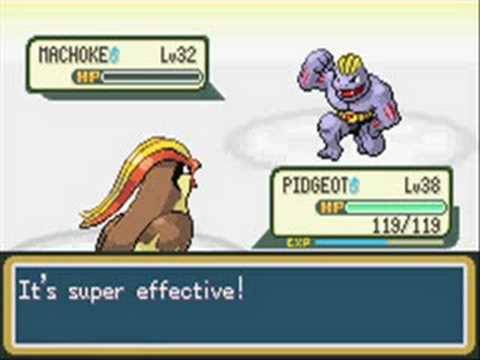 |
| For a certain generation of gamers, this phrase is an adequate substitute for paternal affirmation. |
The immersion factor of feedback can't be overstated, and it's important in every way your character/player can interact with the world. Going back to Zelda again (it just does this so well!), pick any game in the franchise and think of what happens when you hit an enemy with your sword. For 2d games, a little sound will play, and the enemy will flash different colors and sometimes shrink back or bounce away, giving you the impression of combat and simulating damage - after all, in real life enemies DO change color when you hit them with a sword. In more recent entries, there's sometimes a rumble (tactile feedback) and a flash of light/enemy changing color or flinching (visual), and sometimes there's even a brief slowdown at the moment of impact that emphasizes it. The sound has a big effect too: Link's sword usually makes a swishing sound as it passes through empty air, but when it hits an enemy it makes a shearing sound like it's passing through something, and sometimes a triumphant note plays in the music.
Saturday, October 13, 2012
Review: Closure
When a friend of mine first said "Hey, have you seen this? It looks like your game," I was pretty angry at first that someone was already selling a game that kind of looked like mine and used similar mechanics, not least of which because that game looked awesome. When people at BostonFIG looked at our game, they'd say, "It reminds me of something, um, it's a recent game..." and I'd say "Closure." And usually I was right.
Closure is a 2d puzzle-platformer that takes a number of cues from games like Braid and Limbo. Like Braid, the emphasis is on the "puzzle" part (Limbo emphasizes the "platformer" part), and like Limbo, it reveals its narrative silently, preferring to evoke emotion rather than tell a story. It's not wholly clear who your character is; you play as a strange creature that adopts personas for each of the different environments you explore. The chief mechanic in the game is light; much of the screen is dark, and light is only produced by a few objects, usually fragile glass spheres that you can carry with you. If an object isn't visible, it doesn't exist, so you can make obstacles vanish by shining spotlights away from them, but you can also fall through a floor to your death if you forget to bring a light with you. There are a few other mechanics introduced later, but all of them revolve around this one, and all are simple enough - though the puzzles that involve them usually aren't.
The puzzles themselves will always be at the forefront of your attention - each one is self-contained in its own room, with your objective always to get through a door so you can proceed to the next level. This construction means you'll never loose sight of the fact that you're playing a game; the puzzles aren't especially organic, so it always feels like you're solving for solving's sake (as opposed to games like Riven or Limbo, where forward progress is about learning how to make do with the tools the environment gives you). Still, they're incredibly fun, and some quite devious. The pacing is excellent; you'll walk into a new room with no sense of the puzzle, but after a few minutes of exploring and lighting up the room, you'll come to understand the objective and how best to carry it out. Usually figuring it out is the hard part, though there are a few, especially towards the end, that demand precise execution and punish you for small mistakes. It's a little frustrating sometimes, but not to the point of distraction or disappointment.
Despite being a 2d black-and-white puzzle platformer, the art style in Closure is quite different from Limbo's. Both make great use of light and shadow, but Closure has fewer grays, and much more scenic; you'll really feel like you're meant to stop and look at the backgrounds, and doing so is essential to piecing together the narrative. The audio is fabulous. Sound effects are used sparsely but to great effect, from the glassy shattering of light-producing globes to the little clown-honk made when you shoot a target in later levels. The music is grand and intense, and does almost as much work setting the mood as the visuals do.
And mood-building is critical to the success of the game. As mentioned earlier, the story isn't told explicitly. You're given impressions, and those impressions are enough to evoke feelings that are, at times, quite powerful. By the end, the story itself feels like a puzzle that can be solved, and though some players may find that attractive it may seem frustrating or unnecessary to others. At the end of the day, Closure is part of a tradition, alongside games like Braid and Limbo, that has only begun to develop recently. This tradition takes simple game templates and finds ways to develop them so that the gameplay is fresh despite being a variation on a relatively played-out style - it's kind of a "platformer-with-a-gimmick" model, and it's how a lot of indie devs are making games because it's easy to execute and there's a large player base already familiar with it. Importantly, these games try to use their mechanics to tell their stories, and they're often looking to tell stories that are more complex and thoughtful than video games are usually credited with. The trend that worries me is that these stories sometimes grow too obtuse or vague to really understand - it's easy to spend as many hours trying to solve Braid's story as its puzzles, and the muteness in Limbo and Closure made me wonder whether I'd missed something or whether the games were meant to be vague. It's great if games tell more thoughtful stories; it's less great if those stories alienate parts of their audience by being obtuse or overly intellectual.
That never feels like the point in Closure, though. The story is light and sometimes confusing, but the melancholy it evokes is powerful, and the way it uses its mechanics of illumination and illusion to create that melancholy is spot-on. If you like trying to piece together the narrative, collecting all the game's secrets, do; if not, enjoy the puzzles and the art, and let the mood carry you through. Whichever you prefer, Closure is delightful and memorable, and definitely worth exploring.
Site: http://closuregame.com
Steam: http://store.steampowered.com/app/72000/
 |
| Together, the protagonists in our game even have the same number of legs. |
 |
| It's not uncommon for a level to be mostly this dark throughout. |
The puzzles themselves will always be at the forefront of your attention - each one is self-contained in its own room, with your objective always to get through a door so you can proceed to the next level. This construction means you'll never loose sight of the fact that you're playing a game; the puzzles aren't especially organic, so it always feels like you're solving for solving's sake (as opposed to games like Riven or Limbo, where forward progress is about learning how to make do with the tools the environment gives you). Still, they're incredibly fun, and some quite devious. The pacing is excellent; you'll walk into a new room with no sense of the puzzle, but after a few minutes of exploring and lighting up the room, you'll come to understand the objective and how best to carry it out. Usually figuring it out is the hard part, though there are a few, especially towards the end, that demand precise execution and punish you for small mistakes. It's a little frustrating sometimes, but not to the point of distraction or disappointment.
 |
| Some of the background art is gorgeous, when the game chooses to show it. |
And mood-building is critical to the success of the game. As mentioned earlier, the story isn't told explicitly. You're given impressions, and those impressions are enough to evoke feelings that are, at times, quite powerful. By the end, the story itself feels like a puzzle that can be solved, and though some players may find that attractive it may seem frustrating or unnecessary to others. At the end of the day, Closure is part of a tradition, alongside games like Braid and Limbo, that has only begun to develop recently. This tradition takes simple game templates and finds ways to develop them so that the gameplay is fresh despite being a variation on a relatively played-out style - it's kind of a "platformer-with-a-gimmick" model, and it's how a lot of indie devs are making games because it's easy to execute and there's a large player base already familiar with it. Importantly, these games try to use their mechanics to tell their stories, and they're often looking to tell stories that are more complex and thoughtful than video games are usually credited with. The trend that worries me is that these stories sometimes grow too obtuse or vague to really understand - it's easy to spend as many hours trying to solve Braid's story as its puzzles, and the muteness in Limbo and Closure made me wonder whether I'd missed something or whether the games were meant to be vague. It's great if games tell more thoughtful stories; it's less great if those stories alienate parts of their audience by being obtuse or overly intellectual.
That never feels like the point in Closure, though. The story is light and sometimes confusing, but the melancholy it evokes is powerful, and the way it uses its mechanics of illumination and illusion to create that melancholy is spot-on. If you like trying to piece together the narrative, collecting all the game's secrets, do; if not, enjoy the puzzles and the art, and let the mood carry you through. Whichever you prefer, Closure is delightful and memorable, and definitely worth exploring.
Site: http://closuregame.com
Steam: http://store.steampowered.com/app/72000/
Tuesday, October 9, 2012
What do we want from our AI?
We've been working on implementing our first enemies (if that's the correct word for it) in Candlelight, and one thing we have been considering is how we'll do the AI. Our problems so far haven't been behavioral so much as technical (we're still trying to find the best way to implement what we want to do in Unity), but I got to thinking about AI in games this morning and thought I'd talk a little bit about what role it can play.
It's sometimes helpful to think of characters controlled by some kind of AI - I'm just going to group them collectively as Non-Player Characters, or NPCs - as analogues to characters in books or movies. Characters in a well-crafted book behave in a way that makes some kind of sense; we might not always agree with their choices or find them to be rational, but ideally we can understand why they might make them. We expect them to behave in some way that seems reasoned, consistent, or meaningful. The Pac-Man ghosts chase us; we're not really sure why, but there it is. If one of them went into the corner and sat there, or only ever circled around one brick, we'd wonder what it was doing.
The thing is, in a book or movie any action of a character is something carefully sculpted by the writer in response to a particular set of circumstances, all known beforehand to the writer. When Iago tells Othello a lie about Othello's wife Desdemona, Othello's reaction is based on a few very exact, very particular circumstances, including his feelings of self-worth, his perceived friendship with Iago, and his relationship with Desdemona. To say it's easy to come up with his reaction is a ridiculous overstatement, but in part that's because the reaction Shakespeare wrote was fine and nuanced (if crazy and violent), and that's what makes the characters in the play so intriguing.
As game developers, we don't get those exact sets of known circumstances. We can specify conditions for an event, but when the number of unknowns start to pile up, it's hard to create a believable reaction for every set of circumstances.
What's lost by this absence of pants-related dialogue is open to interpretation, though arguably if this is how you're playing Skyrim, you may not that interested in the authenticity of the NPC's reactions. What it means, though, is that there are limits to how realistic the gameplay feels, and those limits are tested when you go outside the bounds of what the game is centrally about - that is, slaying dragons, and doing a number of other, smaller quests along the way. (The fact that Bethesda actually did include a number of dialogue lines that characters will sometimes throw out when you're mostly nude probably says that a lot of players enjoyed doing this in Oblivion and Morrowind). There's a lot you can do in Skyrim, and the AI feels pretty good because NPCs react in a reasonable way to most of what you do.
And in general, that's what we ask for in a video game. When we turn up the difficulty in StarCraft 2 and see that our computer opponent is making units in a clever way (as opposed to making one of everything before building an army), is focusing on your weak points, and is changing its army compositions to counter yours, we think that's good AI. When that same computer marches its giant army to your unprotected front, only to turn that entire army around and waltz slowly across the map back to its own base because you've threatened with a pitiful force, we (rightly) think that's bad AI. The Turing test is useful here - would a person behave that way? not a skilled one - but we don't always need an AI that sophisticated. Sometimes, we barely need anything we'd call an AI at all; we don't need the goombas in Mario to make clever decisions, we need them to walk forward. They're more an obstacle than an enemy. And sometimes, that's fine. Mario isn't about believable character interaction. We're a little disappointed in the AI when that very first goomba walks itself right off a cliff without our intervention, but we get over it when we do likewise. We usually accept the idea of enemies as obstacles rather than rational actors (otherwise we'd expect the Bob-ombs to rush us all at once instead of in single-file), provided it still feels like they're trying to impede us. If the Hammer Bros. always threw hammers away from Mario, we would probably feel like the game was showing us a challenge (we can see the hammers) but not actually confronting us with it, and that would quickly kill any sense of achievement.
If your game, and your game world, is to feel like a believable world where the point is at least partly exploration and the gameplay is at least partly about feeling like you're an influence, you'll likely want the AI of the game to reflect that - you want characters and enemies that treat your character seriously, that respond to you. If, on the other hand, your game is more focused on the "game" side, then we want enemies that act to inhibit you, that change what they're doing based on what you're doing so that our players continue to feel challenged. In all cases, if our players feel like their choices and their skills matter, or they're going to question whether they have any agency at all. Sometimes that reaction can net you a cool emotional experience (this is in line a bit with what I said about horror last week). Unless you're going for it, though, take care to avoid it. People often come to games because they want a little more control than other media afford, and it's frustrating to be denied that - especially in a way that doesn't feel artful or deliberate.
It's sometimes helpful to think of characters controlled by some kind of AI - I'm just going to group them collectively as Non-Player Characters, or NPCs - as analogues to characters in books or movies. Characters in a well-crafted book behave in a way that makes some kind of sense; we might not always agree with their choices or find them to be rational, but ideally we can understand why they might make them. We expect them to behave in some way that seems reasoned, consistent, or meaningful. The Pac-Man ghosts chase us; we're not really sure why, but there it is. If one of them went into the corner and sat there, or only ever circled around one brick, we'd wonder what it was doing.
 |
| We wouldn't want our brightly-colored ghosts to not be believable. |
 |
| Yup. |
Take Skyrim, which is actually quite good at AI in a lot of ways. Characters eat and sleep, run and hide when they're scared or fight when they're threatened, talk among each other, comment on quests you've accomplished or pants you aren't wearing, and so forth. That said, there are so many variables that for any given interaction with AI the devs couldn't hope to have accounted for all of them. If you approach the leader of a city after saving the city from a dragon, he'll praise and reward you, as might be expected. He won't, however, change his speech based on how many years it's been since you killed that dragon, on whether "somebody" quietly killed every person in his city, on whether the emperor has been murdered, on whether you're wearing pants, on whether he's wearing pants, or on whether you're wearing his stolen pants.
 |
| On whether you're violating his personal space, etc. |
And in general, that's what we ask for in a video game. When we turn up the difficulty in StarCraft 2 and see that our computer opponent is making units in a clever way (as opposed to making one of everything before building an army), is focusing on your weak points, and is changing its army compositions to counter yours, we think that's good AI. When that same computer marches its giant army to your unprotected front, only to turn that entire army around and waltz slowly across the map back to its own base because you've threatened with a pitiful force, we (rightly) think that's bad AI. The Turing test is useful here - would a person behave that way? not a skilled one - but we don't always need an AI that sophisticated. Sometimes, we barely need anything we'd call an AI at all; we don't need the goombas in Mario to make clever decisions, we need them to walk forward. They're more an obstacle than an enemy. And sometimes, that's fine. Mario isn't about believable character interaction. We're a little disappointed in the AI when that very first goomba walks itself right off a cliff without our intervention, but we get over it when we do likewise. We usually accept the idea of enemies as obstacles rather than rational actors (otherwise we'd expect the Bob-ombs to rush us all at once instead of in single-file), provided it still feels like they're trying to impede us. If the Hammer Bros. always threw hammers away from Mario, we would probably feel like the game was showing us a challenge (we can see the hammers) but not actually confronting us with it, and that would quickly kill any sense of achievement.
If your game, and your game world, is to feel like a believable world where the point is at least partly exploration and the gameplay is at least partly about feeling like you're an influence, you'll likely want the AI of the game to reflect that - you want characters and enemies that treat your character seriously, that respond to you. If, on the other hand, your game is more focused on the "game" side, then we want enemies that act to inhibit you, that change what they're doing based on what you're doing so that our players continue to feel challenged. In all cases, if our players feel like their choices and their skills matter, or they're going to question whether they have any agency at all. Sometimes that reaction can net you a cool emotional experience (this is in line a bit with what I said about horror last week). Unless you're going for it, though, take care to avoid it. People often come to games because they want a little more control than other media afford, and it's frustrating to be denied that - especially in a way that doesn't feel artful or deliberate.
Friday, October 5, 2012
Genre and Games - Horror
I went on this weird kick recently where I played several horror games in rapid succession and reviewed them for this site, and before that fled too far from my mind I wanted to write a little about what I think video games do with horror that seems unique to the medium. If this one goes well, I might try to look at other genres from a similar perspective.
(I should start with the disclaimer that I'm not an expert on horror in either films or video games; most of what I'll be talking about is based observations from a few games and a few assumptions about what people find scary. If I say something that seems incorrect, correct me!)
One of the things that has a significant impact specifically on horror games is the fact that games are about control. Games as stories are often differentiated from other modes of storytelling by the fact that you have some form of agency, but this gets interesting in horror games because, often, horror is specifically about not having agency. Most horror movies I can think of include, as a major element, the helplessness of the protagonist. Alien leave the protagonists in space with few weapons and an enemy they can barely track that's as dangerous to kill as to leave alive. Trapping the protagonists, disarming them, subjecting them to an enemy that is stronger than they are and too incomprehensible to fight - this is how horror movies like to play. (Unless they're just throwing gore at you, but I find those movies less frightening and more viscerally repulsive).
Historically, video games have taken a different tack. Think about Doom:
The monsters are scary, but you've got weapons to kill them with. You get lots of stress in the game - monsters can always come out of nowhere at you, and when they do you get a jump-scare, but then you get the immediate catharsis of blowing it to bits. And you can do that all the way to the end of the game, until you blow away the last enemy, at which point you win.
And that might be at the bottom of why it's hard to make games scary: the "You Win" part. Part of the tension in horror movies is that often you don't know who will make it to the end, and often nobody does. At no point do you have any kind of security in the protagonist's safety. In games, on the other hand, you know that you'll survive until the end, or at least that if you die you'll be able to pick up near where you left off and continue. Games have toyed with taking this security away, but it's difficult to do without making the play seem meaningless. The ensuing catch-22 - make it possible for the player to have a happy ending, or take away the player's satisfaction at having succeeded - kills the horror at best and kills the game at worst. Even games I love, like Amnesia, had a tough time working out how to end the game in a way that felt satisfying and consistent with the narrative without reducing the suspense throughout the game.
So, how do games work with what they've got to give you a compelling horror experience?
The best way to turn the potential disadvantage of control into something that works for horror games is to limit that control in a frightening way. I've never been an especially big fan of the Resident Evil series (the walking-around controls were horrifying enough for me), but in the one I played - I think it was Zero - I was really impressed by how limited the items were. It was in a lot of ways not unlike Doom - there are enemies, you shoot them, they die - but the fact that you had an extremely limited amount of ammunition, health, gasoline (for incinerating downed zombies), and so on really brought the "survival" aspect of survival horror to the forefront for me. The horror games I've reviewed previously all got a lot of mileage out of limiting control as well. Amnesia took away your ability to fight back, and to look at monsters. Limbo made your character so frail that barest survival - sometimes requiring terrifying measures - became a triumph. And Home played so many brilliant tricks on the narrative that by the end it was really hard to say what you had in the way of control.
Home was June 2012. A game as recent as 2012 did something really cool and freaky and innovative with the genre, to the extent that it belongs in the genre at all. By comparison, I just watched Cabin in the Woods a week ago, and while it did some clever things in relation to the horror genre, it didn't feel like it did much that was interesting in the horror genre. A lot of what I've read about the film talks about praises it as inverting/critiquing the horror formula that has gotten so predictable, and while I don't think that's unfair I think it says more about horror movies in general than it says about Cabin in the Woods. Horror is far from being a dead genre in film, and people are still finding new ways to explore it. But the innovations in film itself have been relatively few in recent years, and that's what makes it so exciting to see games like Slender or Home do so well. I would say in general that there's a little more flexibility in what a game can be than in what a movie can be, and certainly there's been a lot less ground covered in games than in film - but that's making a more general statement about video games and other media than I'd like to focus on in this post.
At the core of it, I think the best thing video games have to offer to the body of entertainment that we call "horror" is the way the game mechanics - especially control or lack thereof - can be used to generate tension. This isn't just about adjusting difficulty, it's about specifying the means you have for interacting with the game world. The level of interactivity in Amnesia is almost perfect; you can pick up and throw objects, click and drag to swing open doors, and so on. The fact that these motions are all pretty imprecise - sometimes it's hard to open doors, sometimes turning a crank is tricky - actually helps the tone. The seconds spent fumbling at a door are often the difference between life and death, and when you're being chased by a monster can remind you of the terrifying nightmares where you everything goes wrong at the instant you imagine it going wrong. Home's matter-of-fact past-tense leaves you feeling helpless even as you make all the decisions that determine the story, because the story has already happened. And Slender's refusal to let you pause or tab out of the game force the pace so that you don't have a chance to recover from the panic it induces.
I wanted to use this post to tie off the string of horror games I reviewed, and I think at the bottom of it is this: Horror is about a number of emotions, but fear - arguably the core emotion - is evoked mainly through feelings of helplessness. When you put your audience in a position of control, as when they are playing a game, it's your job to balance that control, to find a way to keep that control from being arbitrary while at the same time giving them the sense of oppression and powerlessness that is so critical to evoking fear.
(I should start with the disclaimer that I'm not an expert on horror in either films or video games; most of what I'll be talking about is based observations from a few games and a few assumptions about what people find scary. If I say something that seems incorrect, correct me!)
One of the things that has a significant impact specifically on horror games is the fact that games are about control. Games as stories are often differentiated from other modes of storytelling by the fact that you have some form of agency, but this gets interesting in horror games because, often, horror is specifically about not having agency. Most horror movies I can think of include, as a major element, the helplessness of the protagonist. Alien leave the protagonists in space with few weapons and an enemy they can barely track that's as dangerous to kill as to leave alive. Trapping the protagonists, disarming them, subjecting them to an enemy that is stronger than they are and too incomprehensible to fight - this is how horror movies like to play. (Unless they're just throwing gore at you, but I find those movies less frightening and more viscerally repulsive).
Historically, video games have taken a different tack. Think about Doom:
 |
| I think the walls frighten me the most, maybe because they're the most like something you'd see in Alien. |
And that might be at the bottom of why it's hard to make games scary: the "You Win" part. Part of the tension in horror movies is that often you don't know who will make it to the end, and often nobody does. At no point do you have any kind of security in the protagonist's safety. In games, on the other hand, you know that you'll survive until the end, or at least that if you die you'll be able to pick up near where you left off and continue. Games have toyed with taking this security away, but it's difficult to do without making the play seem meaningless. The ensuing catch-22 - make it possible for the player to have a happy ending, or take away the player's satisfaction at having succeeded - kills the horror at best and kills the game at worst. Even games I love, like Amnesia, had a tough time working out how to end the game in a way that felt satisfying and consistent with the narrative without reducing the suspense throughout the game.
So, how do games work with what they've got to give you a compelling horror experience?
The best way to turn the potential disadvantage of control into something that works for horror games is to limit that control in a frightening way. I've never been an especially big fan of the Resident Evil series (the walking-around controls were horrifying enough for me), but in the one I played - I think it was Zero - I was really impressed by how limited the items were. It was in a lot of ways not unlike Doom - there are enemies, you shoot them, they die - but the fact that you had an extremely limited amount of ammunition, health, gasoline (for incinerating downed zombies), and so on really brought the "survival" aspect of survival horror to the forefront for me. The horror games I've reviewed previously all got a lot of mileage out of limiting control as well. Amnesia took away your ability to fight back, and to look at monsters. Limbo made your character so frail that barest survival - sometimes requiring terrifying measures - became a triumph. And Home played so many brilliant tricks on the narrative that by the end it was really hard to say what you had in the way of control.
Home was June 2012. A game as recent as 2012 did something really cool and freaky and innovative with the genre, to the extent that it belongs in the genre at all. By comparison, I just watched Cabin in the Woods a week ago, and while it did some clever things in relation to the horror genre, it didn't feel like it did much that was interesting in the horror genre. A lot of what I've read about the film talks about praises it as inverting/critiquing the horror formula that has gotten so predictable, and while I don't think that's unfair I think it says more about horror movies in general than it says about Cabin in the Woods. Horror is far from being a dead genre in film, and people are still finding new ways to explore it. But the innovations in film itself have been relatively few in recent years, and that's what makes it so exciting to see games like Slender or Home do so well. I would say in general that there's a little more flexibility in what a game can be than in what a movie can be, and certainly there's been a lot less ground covered in games than in film - but that's making a more general statement about video games and other media than I'd like to focus on in this post.
At the core of it, I think the best thing video games have to offer to the body of entertainment that we call "horror" is the way the game mechanics - especially control or lack thereof - can be used to generate tension. This isn't just about adjusting difficulty, it's about specifying the means you have for interacting with the game world. The level of interactivity in Amnesia is almost perfect; you can pick up and throw objects, click and drag to swing open doors, and so on. The fact that these motions are all pretty imprecise - sometimes it's hard to open doors, sometimes turning a crank is tricky - actually helps the tone. The seconds spent fumbling at a door are often the difference between life and death, and when you're being chased by a monster can remind you of the terrifying nightmares where you everything goes wrong at the instant you imagine it going wrong. Home's matter-of-fact past-tense leaves you feeling helpless even as you make all the decisions that determine the story, because the story has already happened. And Slender's refusal to let you pause or tab out of the game force the pace so that you don't have a chance to recover from the panic it induces.
I wanted to use this post to tie off the string of horror games I reviewed, and I think at the bottom of it is this: Horror is about a number of emotions, but fear - arguably the core emotion - is evoked mainly through feelings of helplessness. When you put your audience in a position of control, as when they are playing a game, it's your job to balance that control, to find a way to keep that control from being arbitrary while at the same time giving them the sense of oppression and powerlessness that is so critical to evoking fear.
Wednesday, October 3, 2012
Things I Would Tell Past-Me
I've been making Candlelight, including conceptualization and letting it rattle around in my skull, for about eight and a half months now. I'm ridiculously proud of how far it's come in that time, and I'm really excited for where it's going next. Still, I sometimes find that I wish I'd done things a little differently at the outset and over the course of this project, and I thought I'd collect some of them in case somebody else is just starting out.
-Start Small. I love Candlelight, really I do, and though I wouldn't trade it for anything, I sometimes wish I'd picked something on a more confined scale to start with - simple art, simple sound, simple gameplay, and small, something I could have finished in a month. In addition to being a game designer, I'm also a writer, and I found that when I first undertook National Novel Writing Month, I couldn't actually tie off the package; the piece I was writing expanded to nearly 100,000 words, and was still a ways from completion when I left it. Writing some 5-10 page short stories helped me get a sense of sufficiency, of knowing when a story was done; trying something more ambitious after that, an 80-page novella, I found I had a better sense of pacing, of how much I could do in a given timeframe, of how to set a narrative arc. With games, the same principle applies, more so if you're trying to sell your game; people will be more likely to take an interest in your project if you've got something finished they can look at.
-Test your ideas before counting on them too much. This is something I need to keep in mind now, as well. At the beginning of the project, before we'd even done much coding, I had a really complicated picture of how our game would be when it was done - what the gameplay would be like, some of what the art would be like, how the story would play out - and not really much evidence that any of that would work in a game, apart from my gut feeling. The most rewarding, and the most informative, use of our time has been getting our mechanic into any playable form and seeing how people receive it. Initially, that was a little green cube and a little blue cube that people could move around, with little clip art for switches and red rectangles for gates that disappeared when you flipped the switch. Time I spent coming up with game concepts that were still way in the future might have been better spent coming up with an idea I could implement now, and figuring out the best way to do that.
-Being bad at something is a terrible reason not to do it. I get annoyed when people are naturally good at things. It's frustrating to spend a lot of time and energy on learning a skill, only to see other people who have never tried it step in and perform it better than you. The thing is, this doesn't happen that often. Most people who are good at something are good at it because they've done it, or things like it. Sure, maybe at the Olympic level all the athletes have inherent physical attributes that make them well-suited to their sport of choice, but the major reason they're good at it is because they spend ALL OF THEIR TIME on it. And below that level, any natural advantage someone may have over you can be overcome by investing more time in it. Jesse Schell, in his book The Art of Game Design*, talks about their being two kinds of talent: little talent (innate or natural ability), and big talent (overwhelming devotion to becoming better). I didn't start making a video game until I overcame the fear of doing it badly. When I started doing it, it turned out that I wasn't very good at making a video game - because it's complicated as hell, and I'd never done it before. I'm still very unpracticed, but it was only when I got over my fear of being bad at it that I started getting better. That's the only way you ever improve. So if you think you can't do something well, try it anyway. You'll work it out, and get better in the process.
-Make friends. My first real attempt at reaching out to the indie community, especially here in Boston, came with this blog, and I'm really a little sad it didn't come sooner. Particularly if your game is something you're only doing part-time or in your free time, it can be really hard to find motivation to work on it when it's just crammed in among so many other things you have to do. Surrounding yourself with people who are working through the same issues can be really inspiring - you'll have a lot in common, and seeing what others accomplish with similar hurdles and hangups can help you overcome your own troubles. Obviously you don't want to ever be completely buried in one social group alone - but at least in Boston, there's a really supportive community for indie game devs, and even if you can't find any in your town you can reach out online pretty easily through Twitter or other social media. Find a way to find people who know what you're going through, and have gotten through it themselves. Knowing other people have done it is one thing; meeting them and putting a human face on that, realizing that they're people with quirks and hobbies and spouses and jobs too, can be incredibly comforting.
Hopefully this is at least useful to some people starting out. I know it's pretty general advice, but even so, I wish I'd found it a little earlier. If you'd like me to elaborate on any point, let me know! And other game devs, if there's anything you wish you'd known going in that you'd like to share, post in the comments - the more, the better!
*honorary mention: Go read The Art of Game Design immediately. It is the best book on game design. If you disagree, you should tell me which book you prefer so I can read that one also.
-Start Small. I love Candlelight, really I do, and though I wouldn't trade it for anything, I sometimes wish I'd picked something on a more confined scale to start with - simple art, simple sound, simple gameplay, and small, something I could have finished in a month. In addition to being a game designer, I'm also a writer, and I found that when I first undertook National Novel Writing Month, I couldn't actually tie off the package; the piece I was writing expanded to nearly 100,000 words, and was still a ways from completion when I left it. Writing some 5-10 page short stories helped me get a sense of sufficiency, of knowing when a story was done; trying something more ambitious after that, an 80-page novella, I found I had a better sense of pacing, of how much I could do in a given timeframe, of how to set a narrative arc. With games, the same principle applies, more so if you're trying to sell your game; people will be more likely to take an interest in your project if you've got something finished they can look at.
-Test your ideas before counting on them too much. This is something I need to keep in mind now, as well. At the beginning of the project, before we'd even done much coding, I had a really complicated picture of how our game would be when it was done - what the gameplay would be like, some of what the art would be like, how the story would play out - and not really much evidence that any of that would work in a game, apart from my gut feeling. The most rewarding, and the most informative, use of our time has been getting our mechanic into any playable form and seeing how people receive it. Initially, that was a little green cube and a little blue cube that people could move around, with little clip art for switches and red rectangles for gates that disappeared when you flipped the switch. Time I spent coming up with game concepts that were still way in the future might have been better spent coming up with an idea I could implement now, and figuring out the best way to do that.
-Being bad at something is a terrible reason not to do it. I get annoyed when people are naturally good at things. It's frustrating to spend a lot of time and energy on learning a skill, only to see other people who have never tried it step in and perform it better than you. The thing is, this doesn't happen that often. Most people who are good at something are good at it because they've done it, or things like it. Sure, maybe at the Olympic level all the athletes have inherent physical attributes that make them well-suited to their sport of choice, but the major reason they're good at it is because they spend ALL OF THEIR TIME on it. And below that level, any natural advantage someone may have over you can be overcome by investing more time in it. Jesse Schell, in his book The Art of Game Design*, talks about their being two kinds of talent: little talent (innate or natural ability), and big talent (overwhelming devotion to becoming better). I didn't start making a video game until I overcame the fear of doing it badly. When I started doing it, it turned out that I wasn't very good at making a video game - because it's complicated as hell, and I'd never done it before. I'm still very unpracticed, but it was only when I got over my fear of being bad at it that I started getting better. That's the only way you ever improve. So if you think you can't do something well, try it anyway. You'll work it out, and get better in the process.
-Make friends. My first real attempt at reaching out to the indie community, especially here in Boston, came with this blog, and I'm really a little sad it didn't come sooner. Particularly if your game is something you're only doing part-time or in your free time, it can be really hard to find motivation to work on it when it's just crammed in among so many other things you have to do. Surrounding yourself with people who are working through the same issues can be really inspiring - you'll have a lot in common, and seeing what others accomplish with similar hurdles and hangups can help you overcome your own troubles. Obviously you don't want to ever be completely buried in one social group alone - but at least in Boston, there's a really supportive community for indie game devs, and even if you can't find any in your town you can reach out online pretty easily through Twitter or other social media. Find a way to find people who know what you're going through, and have gotten through it themselves. Knowing other people have done it is one thing; meeting them and putting a human face on that, realizing that they're people with quirks and hobbies and spouses and jobs too, can be incredibly comforting.
Hopefully this is at least useful to some people starting out. I know it's pretty general advice, but even so, I wish I'd found it a little earlier. If you'd like me to elaborate on any point, let me know! And other game devs, if there's anything you wish you'd known going in that you'd like to share, post in the comments - the more, the better!
*honorary mention: Go read The Art of Game Design immediately. It is the best book on game design. If you disagree, you should tell me which book you prefer so I can read that one also.
Friday, September 28, 2012
(P)Review: Don't Blow It!
So, at BostonFIG I wasn't able to escape much - there were only a few minutes I had to myself, and I used almost all of them for routine biological maintenance. But I was fortunate enough to be able to get a chance to sit down with Don't Blow It!, a production of DinoMage games, and by extension of an excellent fellow named Jonathan Dearborn.
The game was first pitched to me as a multiplayer cooperative platformer, which . . . hadn't occurred to me as a possibility before. The game supports up to 4 people; each one's controls are essentially move, grab, and jump (two people played with NES controllers), and the interesting part comes in getting the players to work together. Players can stack, throw one another, open gates for one another, and so on.
So, that's where you start. The puzzles we saw at the demo did require some thinking, but the major game of it was coordination; of course you need to stack boxes to get out of the pit, but the trouble is getting the boxes on top of one another, making sure that's what people are doing, not getting trapped under a mountain of boxes and sobbing helplessly while waiting for someone, anyone, to come release you (this happened to me at least once), and so on. There are also hats that let you do different things, though I didn't get a chance to play with all of them.
All this leads to a lot of shouting, which is the crux of any single-screen multiplayer experience. I'm only half-joking here. It's loads of fun to see different parts of people's personalities come out, seeing who doesn't get the puzzle and is just messing with the fun hats, who gets it immediately and tries to take charge, who gets it immediately and messes with the fun hats anyway just to piss off the person trying to organize things. It's a game that exposes a lot of silliness in people, kind of like playing Super Smash Bros. with all the items turned up to maximum frequency: you don't always feel in control of what's going on, but that's a big part of the fun.
So, to turn the confusion and fun into frenzy, there's a bomb. At least, there was in the level I played, though presumably there will be other bombs.
The timer goes up on the screen and suddenly it's everyone's responsibility to clear obstacles for and create a path for the bomb to go through until it can be deposited somewhere safe. Which actually happened in the game I played; people opened gates made new stacks of boxes to backtrack to the bin where we were trying to drop the bomb, which we took turns carrying. Other games weren't so lucky; I saw a few people miss the deadline by a hair and end up with a game over.
I've been told that the art will change (they're still looking for an artist - for info, email jonnyd@dinomage.com). Jon has suggested that the game will get even cuter (!!!) with a more refined style. The game experience will also become less general, with the ability to take on more easygoing puzzles or ones that have been tailored to those of us who have been puzzle-platforming for years. That said, what was on show at BostonFIG was an incredibly solid concept: get a group of people to try to collaborate using simple controls, give them some cool toys, and then throw in some timed chaos. I saw a lot of people go through that booth, and a lot of people laughing. The formula certainly fills a need - like I said, cooperative multiplayer puzzle-platformers is a new concept as far as I've seen - and more than that, it's a lot of fun. It's accessible to new players, it's challenging even for those who are used to this kind of puzzle-solving, and it gets a group of people in the same place to start yelling at each other. Games like this are why we will always have local multiplayer, and I'm definitely looking forward to this one.
Website: dontblowitgame.com
 |
| Explosives feature prominently. |
 |
| All I know about the story so far is that every character is a highly trained acrobat, and also incredibly strong. |
 |
| I wore the beanie, and it let me jump higher. For a moment, I lived Calvin's dream. |
So, to turn the confusion and fun into frenzy, there's a bomb. At least, there was in the level I played, though presumably there will be other bombs.
 |
| I can see my Uncle Steve giving me a bomb for my birthday, and I can see giving it to my brother as well. |
I've been told that the art will change (they're still looking for an artist - for info, email jonnyd@dinomage.com). Jon has suggested that the game will get even cuter (!!!) with a more refined style. The game experience will also become less general, with the ability to take on more easygoing puzzles or ones that have been tailored to those of us who have been puzzle-platforming for years. That said, what was on show at BostonFIG was an incredibly solid concept: get a group of people to try to collaborate using simple controls, give them some cool toys, and then throw in some timed chaos. I saw a lot of people go through that booth, and a lot of people laughing. The formula certainly fills a need - like I said, cooperative multiplayer puzzle-platformers is a new concept as far as I've seen - and more than that, it's a lot of fun. It's accessible to new players, it's challenging even for those who are used to this kind of puzzle-solving, and it gets a group of people in the same place to start yelling at each other. Games like this are why we will always have local multiplayer, and I'm definitely looking forward to this one.
Website: dontblowitgame.com
Subscribe to:
Posts (Atom)