(Subheader)

Updates Tuesdays and Fridays.

Thursday, December 19, 2013

Games I've Been Playing

I've been having to cut back on my output a little bit - it might only be one a week, or maybe a couple short ones. I have been playing some games though and just wanted to document said.

Zelda: Wind Waker HD

The Wii U is still lacking anything resembling a Killer App, and if you don't own one already this is probably not the game to get you to buy one. However, if you do own a Wii U, and you didn't actively hate the original Wind Waker, then the HD version is definitely worth the a play-through. Screenshots aren't going to do it justice; it really looks leaps and bounds better than the original, while still maintaining the charm and vitality that made the first release so memorable. The main changes are visual - brighter colors, more detailed shadows - but the handful of gameplay changes are also welcome, easing some of the repetitiveness that the game was originally criticized for. All in all, I was very happy to get to return to this game, and eagerly, if futilely, await the day when Majora's Mask receives the same treatment.

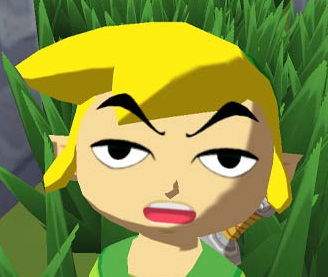
Plus, selfies!
Oh, that reminds me - the ability to take and share pictures, messages, hints, etc. is actually really cool;. It helps keep the Great Sea from feeling so sparse, gives you something to keep an eye out for on long sea trips (you collect bottles floating on the water or washed up on beaches), and is a neat, if very limited, content generation tool. I'd be psyched to see more stuff like this from Nintendo in the future - useful, but not intrusive, interactivity.

The Stanley Parable

I tried to write a post about this game awhile back, but realized I had very little to say about it.

There isn't much TO say about The Stanley Parable that doesn't give it away; if you haven't played it I'll just spoil it for you, and if you have played it, you already understand the experience. Certainly it's a funny game, and a clever one, and I enjoyed it. There's very little actual game to be had here, though; skill doesn't play into it at all, and you rarely get any kind of signal  ahead of time about what any of your decisions mean, or what they might lead to. This is probably another one of those games that makes us go "Well, what is a game, really?" However, I'm not sure it's asking those questions much better than Soda Drinker Pro did, and Soda Drinker Pro asked with more subtlety (and possibly accidentally). So, play it for a funny, new experience, but if you prod it with too many questions you might find it a little flat.
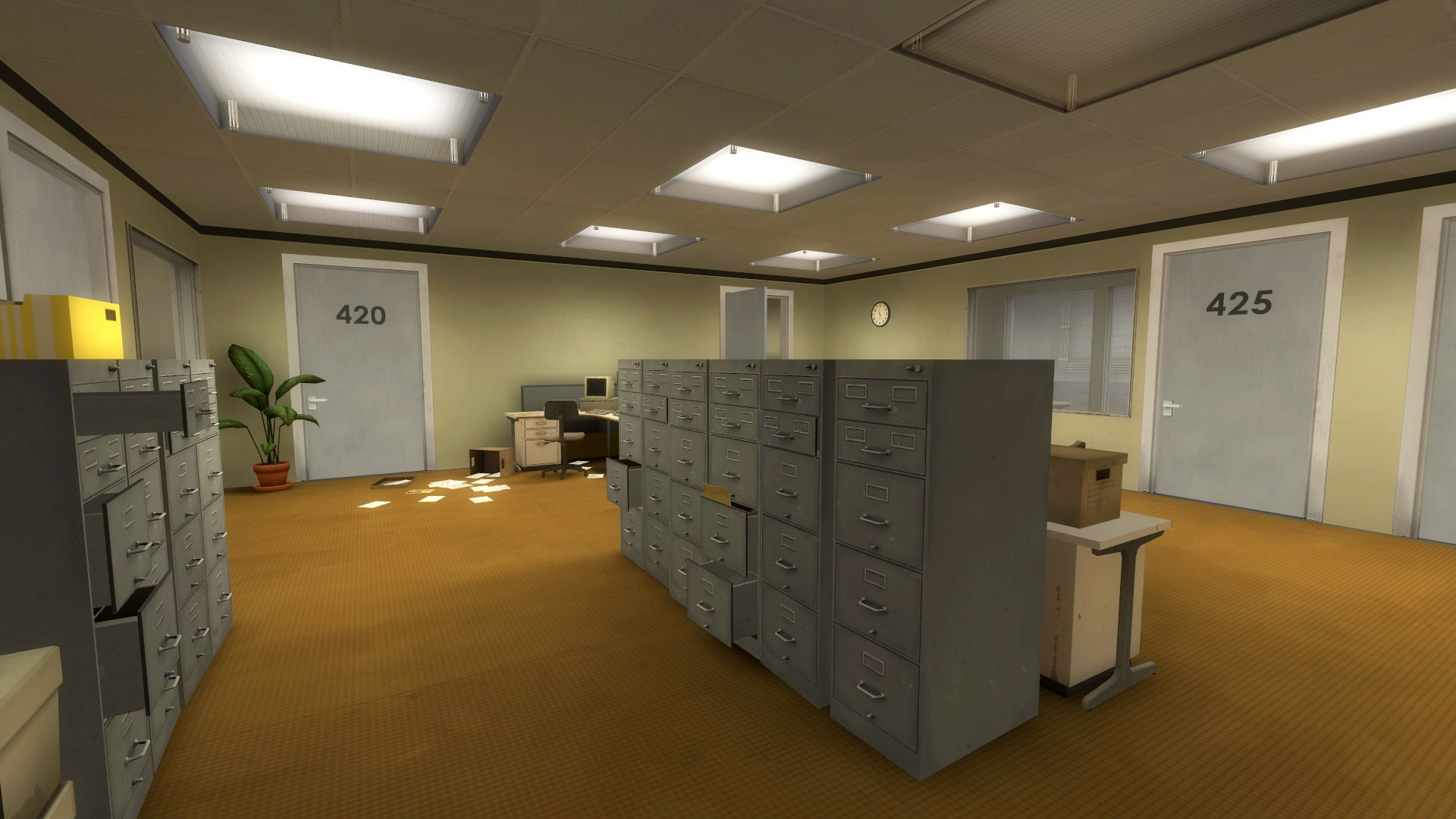
As an office worker, I also just found it a bit too real, down to the omnipresent, condescending internal narrator.


Starcraft 2

It surprises me that this game still holds a lot of appeal for me after so long - it is probably to do with the fact that I enjoy watching competitive SC2 so much. Watching streams or tournaments of pro gamers is still a favorite way for my housemate and me to relax; the games remain dynamic, and slight changes take months to manifest themselves in gameplay. The effects of a recent change that slightly reduces the damage of a particular attack are still unrolling, as some players try to adapt their existing playstyle to accommodate the change, and others look for radically different strategies that take advantage of it. As for me, I'm still too afraid to actually go on the ladder, which means a lot of battling against the AI's, but that can only last so long; human opponents are much less predictable, and much more fun, and eventually the fear of losing will be outweighed by my desire to irritate the Gold League by perpetually going mass Swarm Host.

Pokémon Y Version

After spending a ridiculous amount of time creating a team to be almost kind-of competitive in the game's most difficult single-player mode - the Battle Maison - I've reached the point I always eventually reach in each Pokémon game, where I realize that I like making a team more than using it. I've always had this issue with Magic: The Gathering as well, where deckbuilding interests me more than actually using a deck. For some reason. I care more about theory, about coming up with a tool that actually works, than in seeing it in practice and negotiating with the chances and risks that make up a game. I'll enjoy a few matches of Pokémon before I start wanting to tweak my team a little more, make a slightly better Dragonite, find a move that gives me slightly better coverage to deal with a particular common enemy. Eventually I find it stops being worth the time investment, so unless I find more people to play with I'll probably shelve it for a little while.

Bastion

I spent only a few minutes on this, and though I'm told I should spend more, I'm having trouble motivating myself for it. Everything I heard about the game before starting was that it looks beautiful and has one of the best soundtracks in games, and so far that's borne out. However, the core gameplay underneath it hasn't been enough to keep hold of me. I've never really into these kinds of click-and-run games - they remind me too much of Diablo II, which I've played too much of in my life.

It IS quite pretty, though.

I may go back to it after I get through Journey, Heavy Rain, and Assassin's Creed IV; we'll see how that goes.

Wednesday, December 11, 2013

Subspace Emissary: Lots of Characters, and Where To Put Them

For some reason my roommate and I have been playing a lot of the adventure mode in Super Smash Bros. Brawl despite having more recent purchases I haven't explored as completely as I want to. Now, Super Smash Bros. Brawl's adventure mode - also called The Subspace Emissary -  is not renowned as one of the best parts of the game...

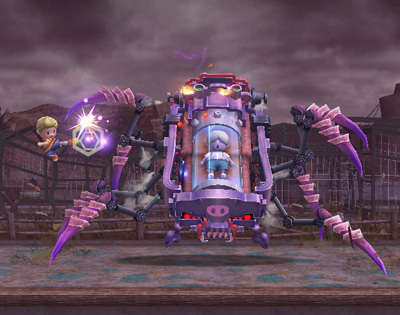
Boss battles are kind of fun though!

...but I lost all the hidden characters on my Wii when I migrated save data to the Wii U, and you can't use GameCube controllers with a Wii U, so you can see I was in quite a bind.

Pictured: The Old Way

The game itself is basically a series of platforming levels and fights with smaller enemies, big bosses, and the game's characters, and you slowly add characters to a number of separate parties that occasionally come together or separate. Since I was playing through it a second time, I thought I'd talk a little bit about some of the design decisions that had to be made in order to create a gameplay mode like this. Things like...

What characters go where

For any given level you'll have a choice between a number of different characters, switching between them when you lose a life. What this means is that the characters you're using have to be appropriately matched to the level. Given how broadly the characters differ, this is a bit tricky, and there's definitely a lot of variation in the levels. For example, one level with Mario and Pit - two characters with high jumps - is relatively vertical and includes a number of complicated platforming pieces. In a level with Donkey Kong and Diddy Kong - one character with very little vertical jumping ability, and another with a complicated and difficult third jump - there are few jumping pieces, with barrels that can launch your characters used to vary the movement through the level. So when designing a level, deciding what characters can be used affects what the structure of the level might be, and vice versa. It also brings up our next question:

What characters go with each other

Sometimes the lowest common denominator sets the level up, and a character without much jumping ability (Marth) is found on a flat level with a character with a lot of jumping ability (Meta Knight). Once Meta Knight is included on a level with characters who can jump (Ice Climbers), the design changes dramatically, forcing the player to continue jumping upward. The designers have balanced stages relatively well for jump height, but less well for movement speed; fast and slow characters do occasionally appear in the same level. This isn't usually an issue for a single player, but with two, one may often leave the other behind, which can be frustrating since the action centers on the first player. Moreover, because the story focuses on a number of different groups of characters in several different places, characters tend to stay united once they've met up in the story - meaning that subsequent levels have to be accounting for any of four, five, or more characters. Later levels reflect this, tending to be more about combat than platforming, but this feature results in more complexity:

What characters go with the story

The Subspace Emissary is not strictly on the same playing field as the Odyssey, or even Ocarina of Time. It clocks in maybe around Donkey Kong Country in terms of narrative sophistication - though it does make the wise choice of omitting any dialogue whatsoever, which by itself would have made Metroid: Other M about 300% better. Still, it has a story of sorts, one that involves characters fighting each other, rescuing one another, travelling across weird, disappointingly generic landscapes, and teaming up to defeat a big scary final boss. This doesn't complicate the gameplay, but it must be managed - if four characters will be in this level you need an explanation for why, and if one leaves but two more arrive for the next level, you again need an explanation. Sometimes the story and gameplay tether nicely - for example Bowser and Ganondorf, two of the main antagonists, are also very heavy characters who can't jump very high. Setting them up as villains means they aren't playable until the end of the game, and obviates designing levels that accommodate their lousy jumping. Other times, things are a little weirder - characters like Olimar are shoehorned into the plot without much accommodation, and in general (as you might expect with such a huge cast) a lot of them end up being vestigial in the story. Which is basically fine until you take a step back and consider...

What The Subspace Emissary has to do with the rest of the game

This, to me, is the mode's biggest failing. My favorite criticism of Starcraft 2's plot goes something like this: The purpose of the single-player game is to creat a context for the multiplayer game. In the original Starcraft, the single-player has all three races - Protoss, Terran, Zerg - fighting one another, and themselves, over everything, and it's all we needed for that multiplayer to work. It's like chess: the pieces represent a royal court, and the game is two kingdoms going to war with each other. Actual war provides the context for chess - it helps us make the stakes clear in our minds - and the single-player mode of Starcraft sets the stakes for the multiplayer one. This is (one reason of several) why the plot of SC2 disappointed; it didn't set up enough of these conflicts clearly enough, and happened in a section vacuum-sealed from the multiplayer elements.
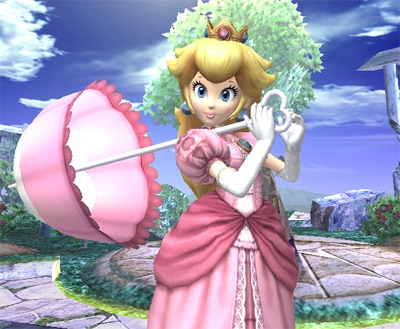
Similarly, The Subspace Emissary doesn't really give us a reason for why the characters are fighting one another. Why anyone's fighting Bowser? Sure; he's a bad guy. Why Peach is fighting Pikachu? Um...

There is hate in those eyes.
It doesn't provide much context for the levels, either, since the adventure mode's worlds are all kind of vague and uninteresting, and only a few settings are even linked to the multiplayer backdrops. Not that the story doesn't kind of work as its own standalone - it's fun watching Mario and Kirby have a friendly bout, and it's funny watching Diddy drag a petulant Falco away from his ship, and both these things add to the characters. Its biggest success is giving us a sense of how these characters might all interact if they were in the same place together, which is the whole point of Smash Bros. in the first place. This mode could have provided us with the context for the rest of the game, and didn't; however, it sets the tone of the game nicely, and gives an excuse to use all the  many characters in a number of different contexts. So, mixed bag on this point.

All this said, I've been having an enormous amount of fun playing with my housemate. Smash Bros. is hard to take too seriously because it's always just been about fun, sometimes nonsensical. There's an element of humor, of randomness, of "that just happened for no real reason, go for it", and on the balance it works. 

Also, we've now unlocked just about every character, so we can go back to everybody just playing as Snake, all the time.

It is how the game is meant to be played.

Thursday, December 5, 2013

Female Characters I Like

I wrote a post on Tuesday about gender and games that was pretty general - it's one thing to say "I think stuff is bad!" and another to say "I think these particular things are bad!" and a third to say "I think these particular things are good!" Today I want to do the last.

One of the issues when talking about women and gaming is media in general, and games particularly, have trouble portraying women in a way that's not stereotyping, short-sighted, or otherwise problematic. Some do better than others, though, and I'd like to talk about some representations of women in games that, while not perfect, do certain things well, avoiding common mistakes and generally writing women that behave kind of like, you know, people.

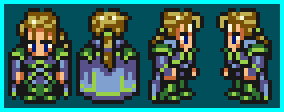
Terra and Celes, Final Fantasy 6


Pictured: Terra.
In general, I feel like Final Fantasy doesn't do great at characterization period; many of the characters are pretty shallow, with the male leads especially tending towards mopey existential crisis in a way I could identify with as a teenager but which I find more than a little ridiculous now. And even though a lot of the female characters tend to be kind of one-dimensional and/or oversexualized and/or fall too easily into stereotype, it still does better than other games through sheer volume of characters. Having a lot of them indicates that you're at least aware that women can fill multiple roles, even if none of them are particularly progressive.

But! Final Fantasy 6 does really well, I think, through a couple of its main characters. The player begins the game as Terra, a part-magical-being-part-human woman who spends a lot of the game trying to figure out what of her emotionlessness is due to being half-monster and what is just due to being a Final Fantasy character. She struggles especially with love, wondering why she isn't attracted to any of the super-sexy male characters.

Mmm.
By the end of the game, Terra's realized that she doesn't actually need a man to experience love, having found an orphanage full of children to take care of. Granted, she's trading one traditional female role for another, but the active rejection of a male relationship is something you don't frequently see in video games (or, hell, a lot of other media). Oh, and also she acts as a lynchpin for the plot by being a bridge between the modern technological world and an ancient magical one, and also she saves the world once or twice by herself - she's got a lot going on, especially given that she's one of fourteen playable characters. Besides, that character turn would bother me more if it weren't for Celes.
Celes begins the game as a military general for the evil empire (evil, because empire) but changes her mind to support the heroes and pursue a romance with the main(est) male character, Locke. In the middle of the game, when everyone gets separated after a worldwide calamity, Celes is the first person able to get it together enough to search for everybody, reuniting them so that they can take on the big baddy at the end of the game. And, yeah, she has a male love interest, and though they stay romantic partners throughout the game, you don't actually need to collect Locke to beat the game (if I recall right - feel free to correct me on that). These two characters drive the plot forward not by being objects or by being love interests, but by having goals, ambitions, and initiative, and it's something I've always enjoyed about this game over others in the franchise.

Alexandra Roivas, Eternal Darkness: Sanity's Requiem

If you missed Eternal Darkness: Sanity's Requiem, you missed out. It's a survival-horror game in the tradition of H.P. Lovecraft tales, where you follow about a dozen characters across four locations and two millennia to uncover an unspeakable horror's slow plot to unleash itself on mankind. So, business as usual. Tying the threads together is Alex, a modern-day woman investigating her grandfather's mansion after his untimely demise and piecing together the stories of the other characters.

This is her "Not having any of your BS" expression. It is her only expression.
Alex is an example of a very reasonable way to make a good female lead character: not making a big deal out of it. No mandatory love interest, no moments where her femininity causes her to be weak or submissive, no point where she doesn't get done what needs get done. Again: not a big deal, except that there are so many main male characters like this, and so few main female characters like this.

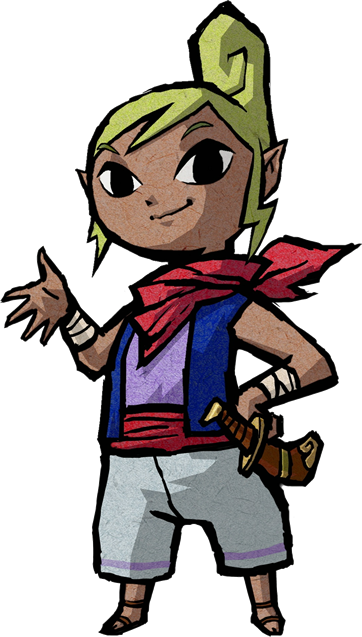
Tetra, The Legend of Zelda: The Wind Waker

Ok, spoilers, etc., but really if you haven't played Wind Waker by now you're letting yourself down.

Pirate-form Tetra.
                                   
Tetra is a boss, chipper captain of a gang of pirates. She acts tough, but underneath it, she's . . . no, actually, she's just tough. Link has more personality in Wind Waker than in any of the other games: he's kind and courageous, but pretty dense, and to say he acts before he thinks would suggest that he does much thinking at all.


Tetra is a counterpoint to Link, taking care of some of the more practical considerations during his quest and bailing him out on more than one occasion when his courage gets in the way of proper decision making. Even in the final fight scene, Tetra and Link have to work together, with him distracting Ganondorf as she takes shots at him, and vice versa.

so happy this picture exists
The big objection to Tetra in this game is that once she is revealed to be Zelda, she immediately cedes a ton of agency and becomes a way more passive, standard princess to be saved. Until that point, however, she's a fun and fascinating character. More importantly, within the context of the Zelda series, which has very few active women, Tetra stands out as one of the more memorable characters period, and helps make Wind Waker one of the best titles in the series.

So! If we were really going to take this apart in a feminist reading, there are clearly objections you could make to any of these characters. But in general, what makes them work is pretty simple: they have agency and goals beyond fulfilling stereotypes. That's all! In practice there are complications because as people who consume media, we have ideas about what tropes and character archetypes make for a compelling story - but those archetypes can be problematic, and reexamining them can help keep characters feeling more fresh, relatable, and realistic.
Do any of you have examples of favorite female characters? Or, as an alternative: favorites characters of any kind that's often presented either unfavorably or unrealistically? 

Tuesday, December 3, 2013

Gender and gaming

I am only infrequently on Twitter, but sometimes I run into something excellent there. Today I came across this article, which explores the history of the gendering of video games in an explicit, in-depth, and very well-illustrated way. The quick summary, which does the article a disservice, is this:

-Video games as an industry began as a generally unfocused, and specifically ungendered, endeavor, where developers made the games they thought would be fun;
-The market became flooded with low-quality games in the early 80's, bottoming out consumer confidence and crippling the industry;
-When the market was revitalized by the likes of Nintendo in the mid-80's, it had a more focused marketing approach that included specifying a target demographic - mainly males.

Again, the article itself is an excellent history, and very good at explaining how video games as a medium came to be aimed primarily at men. Males don't inherently prefer video games; demographic imbalances in gamers are manufactured, deliberately. Which to some extent is just business sense; as the article describes, it's preferable to pin down one market when trying to sell a product, rather than to try to catch everyone at once and miss all of them, as initially happened to the gaming industry. But it's resulted in a couple of big, weird assumptions that to my mind do a lot of damage to gaming as a medium/industry:

First, the idea that women don't enjoy the games already being made (since they're made "for males")
Second, the idea that the only games we should make are games for males (since women don't enjoy games)

See how these are circular, and kind of stupid?*

Clearly, more and more game developers recognize that women play games, or make games for women (or at least with women in mind). Bioware's response to the straight male gamer a couple years back demonstrates this hard. But in general, feminist explorations or criticisms of video games are not entirely well-received (And if your response to Anita Sarkeesian is to roll your eyes, read through the comments on those articles until you start to feel sick). As consumers, male gamers have been pandered to for so long that we don't even really recognize it anymore, which is a giant problem if we want gaming to be a welcoming, exciting, engaging medium for everybody.

In my capacity as a person who wants to make video games, I want the art I produce to be accessible to and enjoyed by a wide range of people. In my capacity as someone who wants to sell video games, I want the games I produce to be BOUGHT by a wide range of people. And in my capacity as a feminist/human being, I want to acknowledge that the demographic our industry picked when it was getting started isn't the only one it should produce for now, and that if we get games that are intended for and reflect a broad variety of experiences, we'll all be the richer for it.

*One note: I talk in this post about "male" as the target demographic for gamers and "female" as the not-target-demographic. I'm doing this because this is the split the original article focused on. However the target demo isn't just males. It's white, straight, cis males, and the issue in the industry isn't just about men and women; it's about every group that is focused on and catered to at the expense of appealing to other demographics and exploring other worldviews. Complicated, but important.

**Two note: I've thought for awhile about doing a post about gender and games, and every time I've avoided it because it doesn't deserve a blog post, it deserves a doctoral program. It's complicated and uncomfortable and it pisses people off, and it's absolutely necessary that we talk about it if we want to mature as an industry. So, this probably won't be the only post I write about gender/sexuality/race/privilege/ableism/etc. in games, because these things deserve a lot more consideration than one guy (particularly one white straight cis guy) can give them in a few moments of writing. I'm still going to write about other aspects of video games, because they interest me, but I definitely think there's much, much more to be said than what I've said here.

Thursday, November 28, 2013

Off Week

Hi!

For those who haven't noticed, I'll be taking this week off - visiting family and generally relaxing a bit. I'll be back with more biting witticisms and incisive commentary on Tuesday.

Enjoy the holidays!

Friday, November 22, 2013

Game Day: Soda Drinker Pro

This won't be a long post. Soda Drinker Pro is a really weird game and to enjoy it you have to be in a particular mood, or have a particular sense of humor, or enjoy questioning stuff for no real reason and without any real hope of answers. Preferably, all three.

Pictured: Art.

In this stirring title - which I was fortunate enough to get to see in a booth at Boston FIG earlier this year - you control a nameless everyman, exploring landscapes rendered in almost-unequaled beauty with a soda in hand at a snail's pace, to better enjoy your surroundings and soda. At any time, you may take a sip of your soda - or not, at your decision! As you drink, your Soda Meter slowly depletes, until the whole soda is consumed. But not to worry! You will immediately receive a new soda and be transported to a new level besides!

As you wander, you find yourself confronting questions that normally we can dodge in day-to-day life. Where am I? What of perception is real, and what is merely spraypainted onto boxes surrounding me to create the illusion of reality? What world exists after this one? Where do we go when we finish our sodas? Why am I moving so slowly? Should I drink soda now? What about now? Maybe now? Now that I'm drinking soda, should I stop? As you ask yourself these questions, your avatar will make comments about his surroundings, and the soda you are drinking there.

This continues for 100+ levels.

I can see three possible reactions to this:

1) Decide that this is all incredibly stupid, and ignore it entirely;
2) Decide it sounds kind of funny and play it for as long as the humor lasts;
3) Treat it like an actual art object worthy of attention and critical consideration.

Is Soda Drinker Pro actually intended as art? Maybe to probably not, but to a person who likes overanalysis as much as I do, it does pose some interesting questions. Why the hell does this game exist? Why are we playing it? For that matter, why are we playing ANY game, when so many of them amount to something similar - walk around a static environment and push a couple buttons to win? What distances Soda Drinker Pro from those other games? The game itself doesn't offer much in the way of answers, but if you enjoy asking them, or if you enjoy simulated soda drinking, it has a lot to give to you anyway. Personally I find it pretty funny that, among so many games trying to be art and so many people asking questions about games as art, this game can be so casually uninterested in those questions and still do such a good job of making me ask them.

And, yeah, for the record it IS the very best first person soda simulator you are ever going to play.

Tuesday, November 19, 2013

Demo Night Lessons: Criticism

The Boston Indies meetup happened yesterday, and it was demo night, so Andrew and I brought a couple of laptops and a couple of burritos and set into full BostonFIG-style "Play our game!" mode, and it was totally awesome.

One of the best things about the Boston Indies is that it's full of indie game developers, many of whom do what I do, except they do it for a living, and it's intimidating as hell to put our game in front of them, and next to their games. But we did, and I wanted to talk just briefly about what we learned and what it makes me think of.

We put this game in front of a lot of people last night and got a ton of really useful feedback. Nobody had only negative things to say, at least to our faces. Even the people with criticisms phrased them in a helpful way, and included positive things on either side, compliment sandwich-style, and generally went way far out of their way to be kinder than they had to be. That said: the negative comments did hurt a bit, and they're the parts that I've been mulling over constantly since I heard them.

The most frequent or most troublesome feedback we got was:

-Not enough of a sense of progress through the level
-Not enough narrative/driving force
-Jumping feels "floaty"/platforming elements feel imprecise in general
-Animation is obviously rough, esp. in contrast with more refined features
-Some puzzles seem more like guesswork than like solving

And, the strangest thing I heard,

-Characters are unusually tall and slender for a platformer

Some of these criticisms don't really hurt (I don't mind that the animation is bad, it's a stand-in and I made it myself with no animation experience), some are frustrating truths but things I already knew (jumping is floaty despite hours of messing around with it, but we know it needs to be fixed), and some are things I feared and was saddened to have confirmed (a "puzzle" I spent a long time on isn't really that puzzley or fun). All of them were useful because they indicated what stood out to experienced players and developers, and told us what we need to sharpen.

In any creative medium, criticism is an incredibly tricky thing to deal with. It takes a lot of energy to pour hours of your life into a project you care about deeply. It takes even more energy to share that meaningful project with others, flaws and all. And it can be pretty tough to stand there while those flaws are listed out and to see it not as a tear-down of what you've so carefully sculpted but as advice on where to chisel next. So, yeah, unfortunately it can be kind of painful to have your project dissected and have people pointing out everything wrong with it, but it's also probably the single most important part of revising your piece into something worthwhile. If you're making your art for anybody but yourself - to share, to give, to sell, to show - you'll want to refine it not just against your own preferences, but those of as many people as you can convince to look at it.

So, with that in mind, this is a cycle I've found to be helpful in accruing feedback:

-Pick something to work on. If you're making a game, this might be as simple as a mechanic or as big as a level; it might be a paragraph of a story or a chapter, a sketch or a painting. Decide what it is you want to do, and set your scale small enough that you don't mind revising or redoing a lot of it.
-Come up with an idea of what you want it to be. This is in general just an important step of design - figure out what it should be before you start messing with it. Sometimes art arrived at organically without much forethought is great - it's not the norm, though. Planning will save you a lot of time in revision and help give you a clearer idea when you're done of what to improve. Include others in brainstorming if it's helpful.
-Work on it until you get stuck, or until you think it can't be improved. If you get to a place where you think what you've made is perfect, you're wrong; this is one of the best times to seek outside input because you'll be getting help for problems you weren't aware existed. That said, don't spend forever honing something to "perfection" before getting an outside view; show it to people along the way, especially when you see a need for improvement but aren't sure how to go about it.
-Find someone (or a group of someones) who will give you precise, honest criticism of the piece. It's definitely nice getting praise, but for this step you need someone who isn't afraid to hurt your feelings. Boston FIG was great for us because we got a lot of praise, which told us that Candlelight was worth making; at the same time, it didn't really inform the creative process much. You want somebody who cares about what you're doing enough that they'll wound your pride, badly if necessary, to make your piece into the best it can be.
-Listen carefully and do not talk. Don't offer defenses, excuses, or apologies; don't tell people you knew about the issue they're describing; don't do anything but take earnest notes on what they've noticed. Even if you think you know it already, write it down -  it matters that the flaw is big enough to be seen both by someone as close to the project as you, and someone as far from it as your critic. I am very bad at anything requiring me not to talk, and this is no exception. At this stage you need to separate yourself from the work; it doesn't matter how it got to the state it's in or why you let it get there, what matters is how it's going to improve from where it is.
-Identify problems. I mentioned earlier that someone said my characters were the wrong shape for a platformer. I took note of this, but didn't bother to ask why they're the wrong shape - that is, what problem their shape creates, and how changing it would solve that problem. This phase is very, very important. If someone tells you "Oh, you should do X" and you do it blindly, you might not solve the problem they're trying to address, or create new problems, or simply compromise your vision of the project. Find a clear way to actually state the problem underlying their criticism or advice - this is what you need to address.
-Repeat. Great! You've found things that need improving! Go improve them, then bring them back up for inspection. You won't solve every problem this way, and you won't please everyone, but neither is the goal. The goal is to create the best product you can within the limits of your abilities, resources, and vision - all of which will be expanded by this revision process.

Throughout this process, it is important to seek out positive feedback as well. Unless you're unnaturally gratified by getting your work criticized, the whole process can start to wear on you. It helps, a lot, to have people reassure you that you're producing something good, that the block of stone you're sculpting still has a masterpiece somewhere in it and you've managed to identify some of those contours. The more of your mistakes you can identify, the more you can learn to correct them, and the better your art will be for it.

I'm going to go try to find a way to make sure my characters don't keep smacking their heads on ceilings when they jump. Wish me luck.